
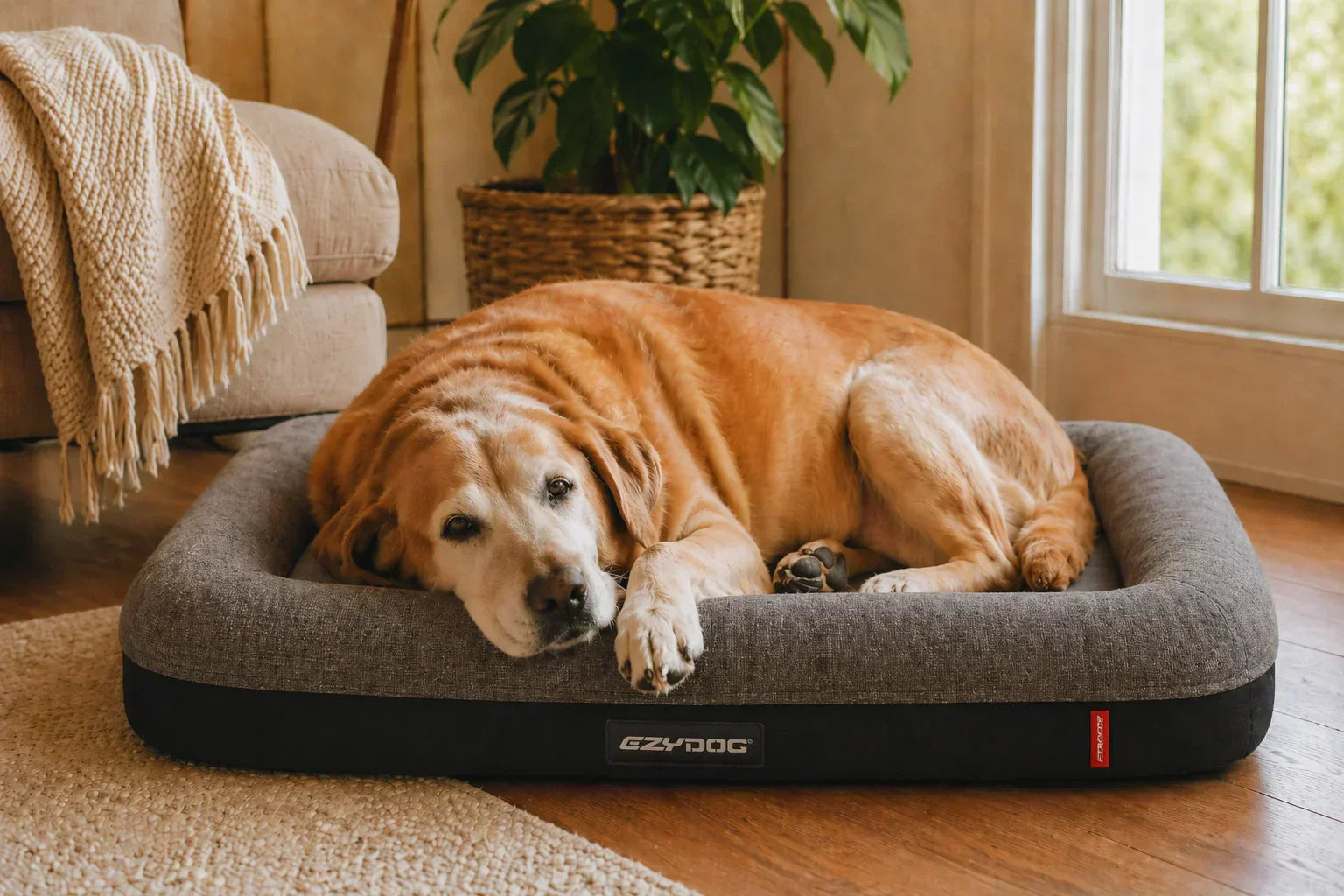
Signs Your Dog Needs an Orthopedic Bed and How It Helps Joint Support
A dog’s sleeping habits can say a lot about how their body feels.
Some dogs curl up anywhere and wake up ready to go. Others shift around for several minutes, avoid hard floors, or seem stiff after getting up. These small changes are easy to miss, especially when they happen slowly over time.
For many dogs, rest quality becomes more important with age, weight changes, injury, or joint discomfort. That is where orthopedic support may help. An orthopedic dog bed is designed to reduce pressure on the body and give better support to areas like the hips, elbows, shoulders, and spine.
This guide explains the signs a dog may need an orthopedic bed, how it helps with joint support, and when extra support matters more than a regular dog bed.
What is an orthopedic dog bed?
An orthopedic dog bed is made to support the body more evenly during rest. Instead of letting the dog sink heavily into one spot, it helps spread weight across the bed surface.
That matters because pressure often builds around bony areas such as:
-
hips
-
elbows
-
shoulders
-
knees
-
spine
For dogs with stiffness, arthritis, age-related soreness, or recovery needs, better support may make rest easier and reduce strain during sleep.
Orthopedic support does not treat medical conditions by itself. It supports comfort, pressure relief, and better rest. If a dog shows pain, limping, or sudden movement changes, a vet should check the cause.
Signs your dog may need an orthopedic bed
Not every dog needs extra support right away. However, certain signs suggest a regular bed may no longer give enough comfort.
1. Your dog wakes up stiff
Stiffness after rest is one of the clearest signs to watch.
A dog may stand slowly, stretch for longer than usual, or take a few steps before moving normally. Some dogs seem fine once they warm up, but struggle right after getting out of bed.
This can happen with older dogs, large breeds, active dogs, or dogs with joint pressure. A supportive bed may help reduce pressure during long rest periods.
2. Your dog avoids hard floors
Dogs often choose where they feel most comfortable. If your dog used to rest on tiles, wood, or thin mats but now avoids them, that may mean hard surfaces feel uncomfortable.
You may notice your dog choosing rugs, folded blankets, couches, or carpeted areas instead. That change often points to a need for softer, more supportive rest.
3. Your dog keeps changing sleeping positions
Some dogs shift around before sleeping. That is normal.
But repeated repositioning, pacing around the bed, or lying down and getting back up may suggest the body is not settling comfortably. Pressure on hips, elbows, or shoulders may make one position hard to hold.
A bed with stronger support may help the dog rest without needing to keep moving.
4. Your dog has trouble getting up
A dog that pushes up slowly, slips, or hesitates before standing may need more support during rest.
This is common in senior dogs, large dogs, dogs recovering from injury, and dogs with arthritis or joint discomfort. The problem may not only be the floor or the bed height. It may be that the dog’s body feels stiff after lying on a surface that does not support them well.
5. Your dog is older
Senior dogs often need more thoughtful rest support.
As dogs age, joints may become less flexible and muscles may lose some strength. Sleep posture, pressure points, and bed support begin to matter more than they did in younger years.
An orthopedic bed for senior dogs may help by giving a steadier surface that supports the body during longer rest periods.
6. Your dog has arthritis or joint discomfort
Dogs with arthritis often need support that reduces pressure on sore areas.
A memory foam dog bed for dogs with arthritis may help cushion the body and reduce stress around joints. The goal is not to cure arthritis. The goal is to make rest more comfortable and help the dog settle without added pressure.
If arthritis is suspected, a vet should guide care, pain management, exercise, weight control, and rest setup.
7. Your dog is recovering from injury or surgery
Recovery often changes how a dog rests.
A dog healing from surgery, muscle strain, ligament injury, or joint stress may spend more time lying down. During that period, pressure relief matters because the body is already working harder.
A supportive bed may help the dog rest in a more stable position and avoid unnecessary strain while healing. For recovery cases, always follow vet instructions first.
8. Your dog is a larger breed
Large dogs carry more body weight through the joints. That weight creates more pressure when they lie down, especially on thin beds or hard floors.
A regular soft bed may feel comfortable at first, but if it compresses too much, the dog may still feel the floor underneath. Larger dogs often need deeper support that holds shape instead of flattening quickly.
9. Your dog has pressure marks or sore spots
Thin fur, repeated pressure, or long rest on firm surfaces may lead to sensitive elbows or pressure areas. This is more common in dogs that lie on one side for long periods or rest on hard flooring.
A supportive bed may help reduce direct pressure on those contact points.
10. Your dog sleeps more than usual
Dogs sleep a lot by nature, especially seniors. Still, a change in sleep habits deserves attention.
If your dog sleeps longer but seems less rested, takes longer to stand, or looks uncomfortable after lying down, the issue may be sleep quality rather than sleep time.
Better support may help the body rest more comfortably through longer periods.
How orthopedic support helps joints
Orthopedic support works by helping the dog’s body rest in a more stable position.
Instead of sinking unevenly, the dog gets support across more of the body. That helps reduce concentrated pressure on certain areas.
It supports pressure relief
Pressure points form where the body presses hardest into the sleeping surface. For dogs, this often happens around the hips, elbows, and shoulders.
A supportive bed helps spread that pressure more evenly.
It helps the spine stay better aligned
A bed that is too soft may let the body sink unevenly. A bed that is too firm may create pressure on bony areas.
The right balance helps the dog rest in a more neutral position.
It may make standing up easier
When dogs sleep on thin or unsupportive surfaces, they may wake with more stiffness. Supportive rest may help reduce that feeling, making the first few steps after sleep easier.
It improves comfort during longer rest periods
Senior dogs and dogs with joint discomfort often rest for longer stretches. A bed that supports their body well becomes more important during those longer periods.
Do dogs need orthopedic beds?
Not every dog needs one immediately.
A young, healthy dog with no stiffness and no trouble resting may do well with a regular supportive bed. However, dogs with age-related stiffness, joint pressure, arthritis, recovery needs, or heavier body weight may benefit from orthopedic support.
The better question is not, “Do dogs need orthopedic beds?” The better question is, “Does this dog need more support than their current bed gives?”
If the answer appears to be yes, it may be time to change the sleep setup.
Orthopedic bed vs regular dog bed
A regular dog bed mainly gives a soft place to rest. That may be enough for many dogs.
An orthopedic bed focuses more on support, pressure relief, and body alignment. This matters more when a dog has stiffness, sore joints, or spends a lot of time lying down.
A regular bed may suit:
-
young dogs with no stiffness
-
dogs that rest comfortably
-
short naps
-
dogs that do not need added support
Orthopedic support may suit:
-
senior dogs
-
dogs with arthritis
-
dogs with hip or elbow pressure
-
larger dogs
-
dogs recovering from injury
-
dogs that wake up stiff
The right choice depends on the dog’s body, age, comfort, and movement.
What to look for in a supportive dog bed
This section should stay educational, not product-led.
When judging whether a bed offers enough support, look at how it performs for the dog’s body, not just how soft it feels to the hand.
Supportive foam
The bed should help hold the dog’s weight without flattening too quickly. A dog should not sink straight to the floor.
Enough space to stretch
Dogs should have room to lie in their natural sleeping position. Some curl up tightly. Others stretch out fully.
Easy access
A dog with stiffness may need a bed that is easy to step into and out of. High edges may not suit every dog.
Washable dog bed cover
Dogs use their beds every day. A removable, washable cover helps keep the sleeping area cleaner.
Stable base
A bed should stay steady when the dog steps onto it. Slipping or bunching may make stiff dogs less confident.
When to speak to a vet
A better bed may help comfort, but it should not replace medical advice.
Speak to a vet if your dog:
-
starts limping
-
cries when getting up
-
avoids stairs
-
has sudden stiffness
-
stops wanting walks
-
shows swelling around joints
-
seems painful when touched
Joint issues, arthritis, injury, and mobility changes need proper assessment. A supportive bed is part of the comfort setup, not the full care plan.
Small changes that support better rest
A bed is only one part of a dog’s rest setup.
You can help by placing the bed somewhere warm, dry, and easy to access. Keep it away from slippery paths if the dog struggles to stand. For senior dogs, place beds in areas where they already like to rest, so they do not need to walk far to get comfortable.
Helpful changes include:
-
placing the bed on a non-slip surface
-
keeping water nearby for older dogs
-
reducing stairs when possible
-
keeping nails trimmed for better grip
-
using gentle exercise to support mobility
-
keeping weight in a healthy range
These small details make the bed more useful in daily life.
How to tell if the bed is helping
Watch your dog over the next few weeks.
Positive signs may include:
-
settling faster
-
changing position less often
-
getting up with less stiffness
-
choosing the bed more often
-
sleeping for longer without restlessness
-
appearing more comfortable after naps
The goal is not instant change. The goal is easier, more comfortable rest over time.
FAQs
What are the signs a dog needs an orthopedic bed?
Common signs include stiffness after sleep, trouble getting up, avoiding hard floors, changing positions often, pressure marks, or needing more support due to age, arthritis, recovery, or joint discomfort.
Do senior dogs need orthopedic beds?
Many senior dogs benefit from extra support because aging may affect joint comfort, mobility, and sleep quality. A supportive bed may help reduce pressure during rest.
Can an orthopedic bed help dogs with arthritis?
An orthopedic bed may help dogs with arthritis rest more comfortably by reducing pressure on sore joints. It does not treat arthritis, so veterinary care is still important.
What bed type helps older dogs with joint pressure?
Older dogs often benefit from a supportive bed that holds shape, cushions pressure points, and gives enough room for their preferred sleeping position.
How do I know if my dog’s current bed is not supportive enough?
If the bed flattens quickly, lets the dog sink to the floor, or your dog wakes stiff and restless, it may not be giving enough support.
Ready to Support Your Dog’s Rest?
Explore EzyDog orthopedic dog beds to compare supportive options designed for everyday comfort and joint support.


Read more

Leave a comment
This site is protected by hCaptcha and the hCaptcha Privacy Policy and Terms of Service apply.