
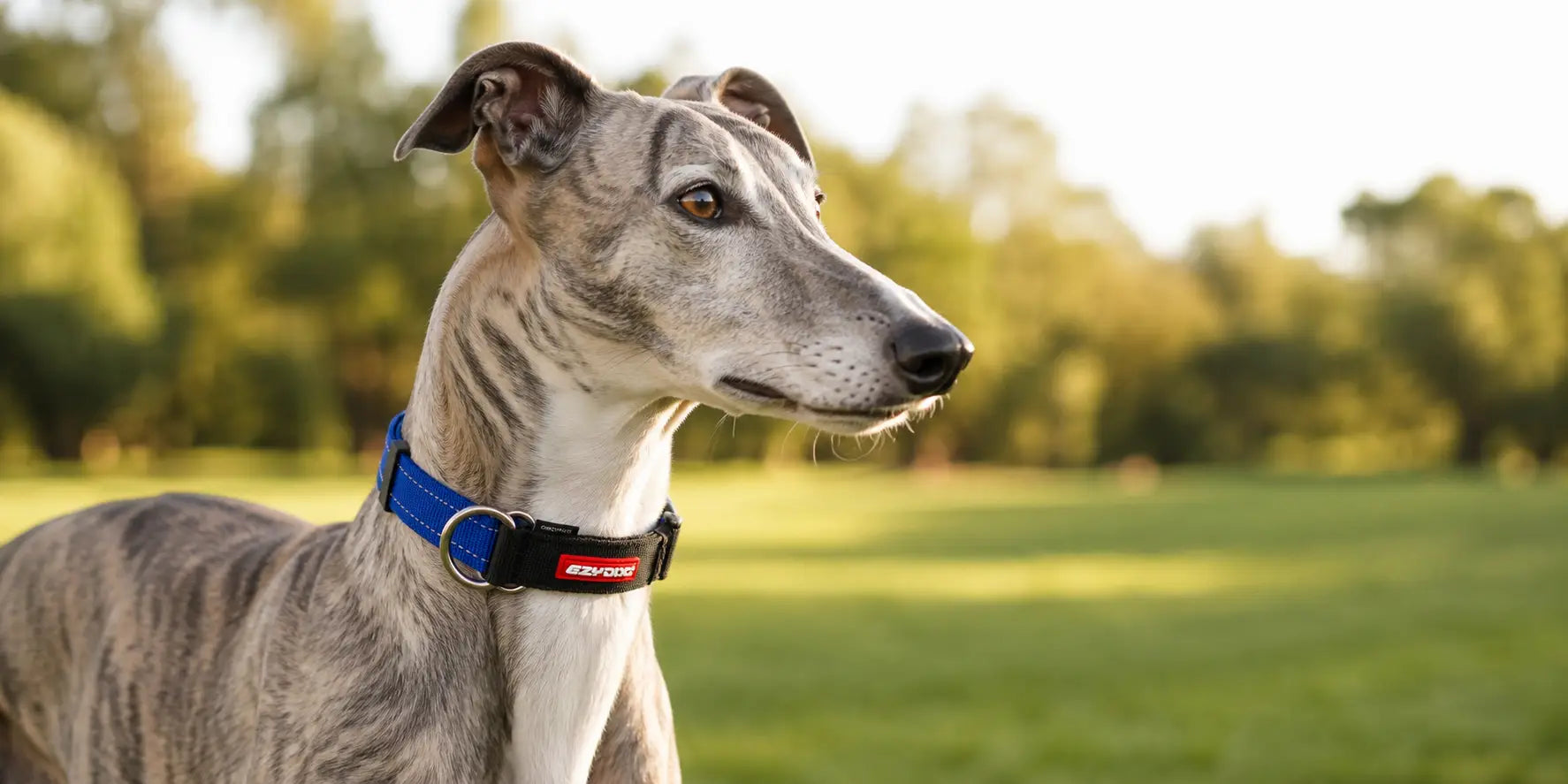
Best Dog Collar for Greyhounds in Australia
Greyhounds are gentle, athletic dogs with a unique body shape. Their long necks, narrow heads and slim build mean standard collars may not always feel secure enough, especially during walks.
For many Greyhounds, the best collar is not just a standard flat collar. It should help reduce slipping, sit comfortably on the neck, and give you a safe place to attach a lead and ID tag. From the EzyDog range, the Checkmate Collar is the best match for many Greyhounds because it uses a martingale-style design that offers more control than a regular collar while staying comfortable when fitted correctly.
If you are looking for a collar for a Greyhound dog, this guide will help you understand what matters, why standard collars may slip, and which EzyDog collar is the most suitable option for daily walking and ID use.
You can compare the full range of dog collars, but this article focuses on Greyhound-specific collar needs.
What Is the Best Dog Collar for Greyhounds?
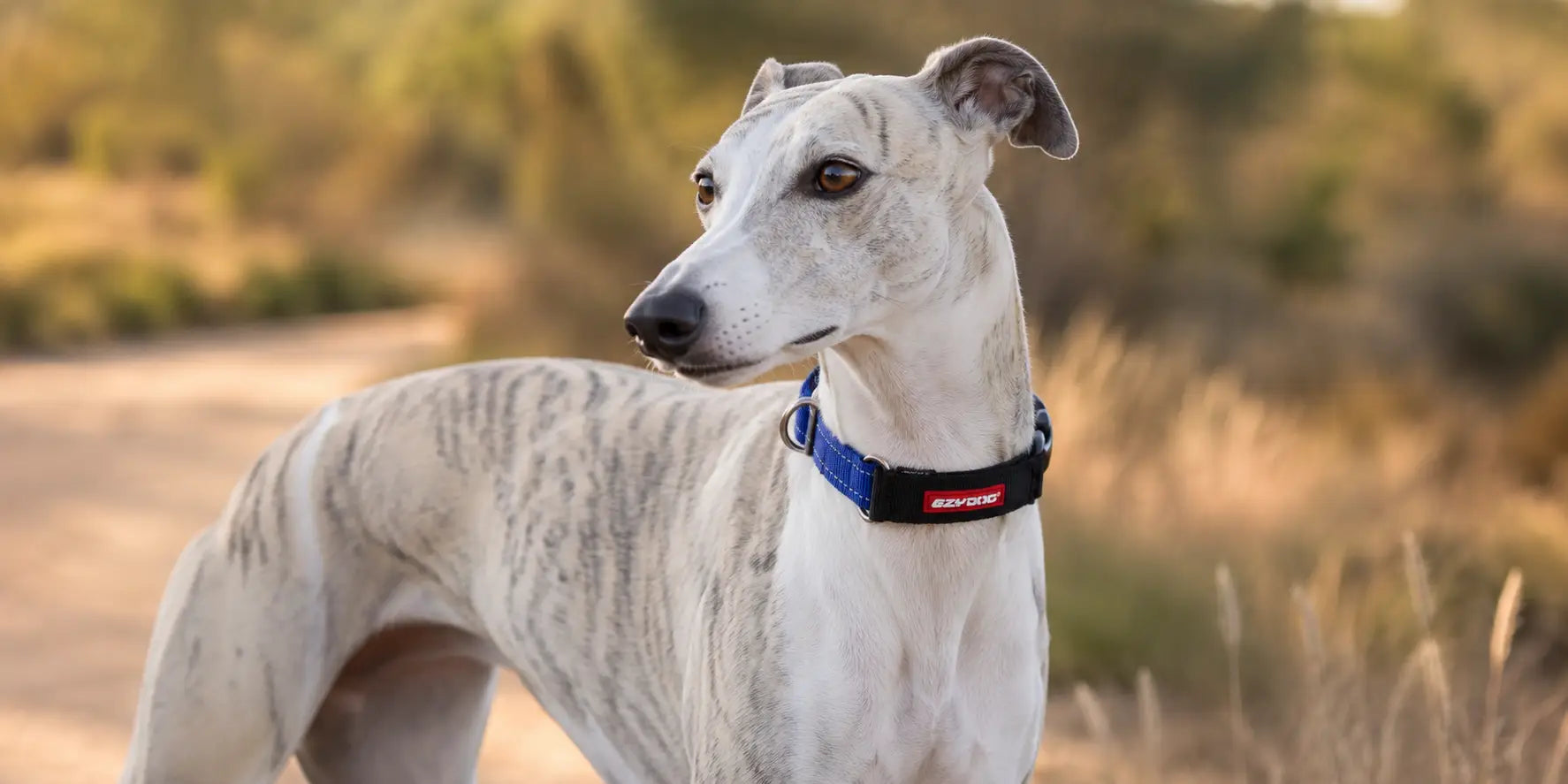
The Checkmate Collar is the best dog collar for Greyhounds from the EzyDog range. It is a martingale-style collar designed to give extra security during walks, making it a better fit for dogs with long necks and narrow heads.
A good Greyhound collar should offer:
-
A secure fit that helps reduce slipping
-
Gentle control during walking
-
Comfortable webbing for daily use
-
Reflective detail for low-light walks
-
Easy lead attachment
-
A practical place for ID tags
-
A fit that suits the Greyhound’s long neck and slim head shape
Some owners search for wide dog collars for Greyhounds because they want better neck coverage and security. That need is valid, but the most important factor is not width alone. The collar should fit the dog’s neck shape correctly and stay secure without causing pressure or discomfort.
Why Greyhounds Need a Different Type of Collar
Greyhounds have a different neck and head shape compared to many other breeds. Their necks are long and slim, while their heads can be narrower than the widest part of the neck. Because of this, some Greyhounds may back out of a standard collar if it is too loose or fitted poorly.
This is why Greyhound dog collars need to be chosen carefully.
A collar that is too loose may slip. A collar that is too tight may create pressure or discomfort. The right collar should sit securely, give gentle control, and still allow your dog to move and breathe comfortably.
Greyhounds are often calm at home, but they can react quickly outdoors. A sudden movement, loud noise, or exciting sight may cause them to pull back or twist. A secure collar helps make daily walks safer and easier to manage.
Best EzyDog Collar for Greyhounds
| Collar | Best for | Why it suits Greyhounds |
|---|---|---|
| Checkmate Collar | Walking, training and slip-aware control | Martingale-style design, durable webbing, reflective stitching and secure walking support |
| Neo Classic Collar | ID use and softer everyday wear | Soft neoprene feel, reflective trim and daily collar comfort |
| Essential Adjustable Collar | Simple ID collar use | Lightweight option for calm dogs that mainly need an identification collar |
Checkmate Collar: Best Collar for Greyhounds
The Checkmate Collar is the strongest recommendation for most Greyhound owners who want a collar for walking.
Unlike a standard flat collar, the Checkmate has a martingale-style design. This means it is made to tighten gently under lead tension and release when the tension stops. When fitted correctly, this helps keep the collar more secure on dogs that may slip out of standard collars.
That design makes sense for Greyhounds because their narrow heads can make regular collars less reliable during walks.
The Checkmate Collar is made with durable EzyDog webbing, includes reflective stitching, and is designed for safe, controlled walking. It gives Greyhound owners a more secure collar option without turning the walk into a harsh experience.
Why it works well for Greyhounds
-
Martingale-style design for added walking security
-
Better suited to dogs with narrow heads
-
Helps reduce the chance of backing out of a standard collar
-
Durable webbing for regular walks
-
Reflective stitching for low-light visibility
-
Simple lead attachment
-
More control without relying on a tight collar fit
For Greyhound owners searching for a martingale dog collar Greyhound option, the Checkmate Collar is the most relevant EzyDog collar to consider.
Is a Martingale Collar Good for Greyhounds?
A martingale-style collar can be a good option for Greyhounds when it is fitted and used correctly. It is often chosen for dogs with narrow heads because it gives a more secure fit than a standard flat collar.
The key is fit.
A martingale collar should not be left so loose that it slips over the head, and it should not tighten so much that it causes discomfort. It should sit neatly on the neck and only tighten gently when there is lead tension.
The Checkmate Collar is useful for Greyhound owners because it gives that extra security during walks while still being easy to use for daily outings.
What to Look for in Greyhound Dog Collars
Secure fit
Security is the most important feature when choosing a Greyhound dog collar. Because Greyhounds have slim heads and long necks, the collar needs to sit in a way that reduces slipping.
A standard collar may work for some Greyhounds, especially for ID use, but it may not be the best walking collar for a dog that pulls back, startles easily, or tries to back out.
Gentle control
Greyhounds are sensitive dogs. A collar should not rely on harsh pressure. It should offer control while keeping the dog comfortable.
The Checkmate Collar works well here because the martingale-style design gives controlled tightening under tension, then releases when the pressure stops.
Comfortable webbing
A Greyhound collar should feel comfortable against the neck. Look for materials that are strong enough for daily use but not rough against the coat.
Comfort matters because Greyhounds have short coats and may be more sensitive to rubbing from poorly fitted gear.
Reflective detail
Many Greyhound owners walk early in the morning or later in the evening. Reflective stitching or trim helps with visibility during low-light walks.
It does not replace safe lead handling, but it is a useful feature for regular outdoor use.
ID tag use
A collar is often the easiest place to keep your dog’s ID tag. Even if your Greyhound wears a harness for some walks, a collar remains useful for everyday identification.
Make sure ID tags are attached securely and do not interfere with the lead attachment point.
Wide Dog Collars for Greyhounds: Do You Need One?
Many owners search for wide dog collars for Greyhounds because they want a collar that feels more secure on a long neck.
A wider collar may feel more balanced on some Greyhounds, but width is not the only factor. Fit, collar type, lead attachment and comfort matter just as much.
If your main concern is slipping, a martingale-style collar like the Checkmate Collar is usually more relevant than simply choosing a wider standard collar. A wide flat collar may still slip if the dog’s head shape allows it to slide over the ears.
The best choice depends on your Greyhound’s neck shape, behaviour on walks and how the collar sits once fitted.
How to Measure a Greyhound for a Collar
A Greyhound should never be fitted by breed name alone. Neck shape and size can vary between dogs, especially between retired racers, adult pets and younger dogs.
To measure your Greyhound:
-
Use a soft tape measure.
-
Measure around the part of the neck where the collar will sit.
-
Keep the tape snug, not tight.
-
Check the product size chart before choosing.
-
Fit the collar and check it again before your first walk.
For a standard collar, you should be able to fit two fingers under the collar without force.
For a martingale-style collar, check the product fit guidance carefully. When the collar tightens, it should not close too tightly around the neck. It should give control without choking, pinching or restricting normal breathing.
Need help choosing the right size? Check the EzyDog Size Guide before ordering.
Greyhound Collar Fit Checklist
Before using a new collar on a walk, check these points:
-
The collar sits neatly on the neck
-
It does not slide over the head when fitted
-
The hardware sits correctly
-
The lead attachment point is easy to reach
-
The collar tightens and releases smoothly
-
ID tags are attached securely
-
Your Greyhound walks without coughing, rubbing or discomfort
-
The collar does not sit too close to the jaw or too low on the shoulders
Check the fit again after a few walks. New gear can shift slightly once it has been worn outdoors.
Collar or Harness for a Greyhound?
A collar is useful for ID tags, gentle walks and everyday use. A harness may suit Greyhounds that need more body support, more control, or extra security across the chest and shoulders.
This blog is focused on choosing the right dog collar for Greyhounds, so the collar recommendation stays with the Checkmate Collar. Still, it is worth being practical. If your Greyhound is nervous, pulls strongly, or needs more full-body support, a harness may be better for some walks.
Many Greyhound owners use both: a secure collar for ID and lead attachment, plus a suitable harness for higher-control walks or travel.
Common Greyhound Collar Problems
The collar slips over the head
This is one of the biggest concerns for Greyhound owners. If a collar slips over the head, it is not secure enough for walking. A martingale-style collar may be a better fit for this issue.
The collar feels too tight
A collar should never restrict breathing or cause rubbing. If your Greyhound coughs, scratches, freezes or shows discomfort, check the fit straight away.
The collar rubs the neck
Greyhounds have short coats, so rubbing can show up quickly. Check the skin under the collar, especially after the first few walks.
The ID tag gets in the way
If tags hit the lead clip or collar hardware, they may become noisy or awkward. Attach ID tags so they sit securely without interfering with the walking connection.
The collar does not release properly
A martingale-style collar should tighten under lead tension and release when the tension stops. If it does not release smoothly, check the fit, hardware and condition of the collar.
Final Recommendation
The Checkmate Collar is the best dog collar for Greyhounds in Australia from the EzyDog range. It is the most relevant option because it is martingale-style, secure for walking, and better suited to dogs that may slip out of standard collars.
Choose the Checkmate Collar if your main concerns are slipping, narrow head shape, long neck fit and safer walking control.
If your Greyhound only needs a simple collar for ID use around the home, a standard collar may be enough. But for regular walks, the Checkmate Collar is the stronger match from the EzyDog collar range.
FAQs
What is the best collar for a Greyhound dog?
The Checkmate Collar is the best option from the EzyDog range for many Greyhounds. Its martingale-style design helps give a more secure fit for dogs with long necks and narrow heads.
Why do Greyhounds need special collars?
Greyhounds often have long necks and narrow heads, which means some standard collars may slip off during walks. A collar with a more secure design can help reduce this risk when fitted correctly.
Are martingale dog collars good for Greyhounds?
Yes, martingale-style collars can suit Greyhounds because they give extra security when a dog pulls back or tries to slip out. They must be fitted correctly so they tighten gently and release when tension stops.
What is the best martingale dog collar for Greyhounds?
The Checkmate Collar is the best martingale-style option in the EzyDog range for Greyhounds. It is designed for walking and training, with durable webbing, reflective stitching and secure control.
Are wide dog collars better for Greyhounds?
Wide collars can suit some Greyhounds because they may feel more balanced on a long neck. But width alone does not stop slipping. Fit, collar type and the dog’s head shape matter more.
Can Greyhounds wear standard collars?
Some Greyhounds can wear standard collars for ID use or calm daily wear. For walking, a standard collar may not suit dogs that back out, pull away or have a very narrow head.
How tight should a Greyhound collar be?
A Greyhound collar should feel secure but not tight. You should be able to fit two fingers under a standard collar. For a martingale-style collar, check that it tightens gently and does not restrict breathing.
Should a Greyhound wear a collar or harness?
A collar is useful for ID tags and gentle walks. A harness may suit Greyhounds that need more body support or extra control. Many owners use both depending on the walk.
Ready to find the right collar for your Greyhound?
A good Greyhound collar should feel secure, comfortable and suited to a long neck and narrow head shape.
EzyDog collars are designed for daily use, with practical features that help support safer walks, reliable ID tag use and a better fit for your dog.


Read more
Leave a comment
This site is protected by hCaptcha and the hCaptcha Privacy Policy and Terms of Service apply.