
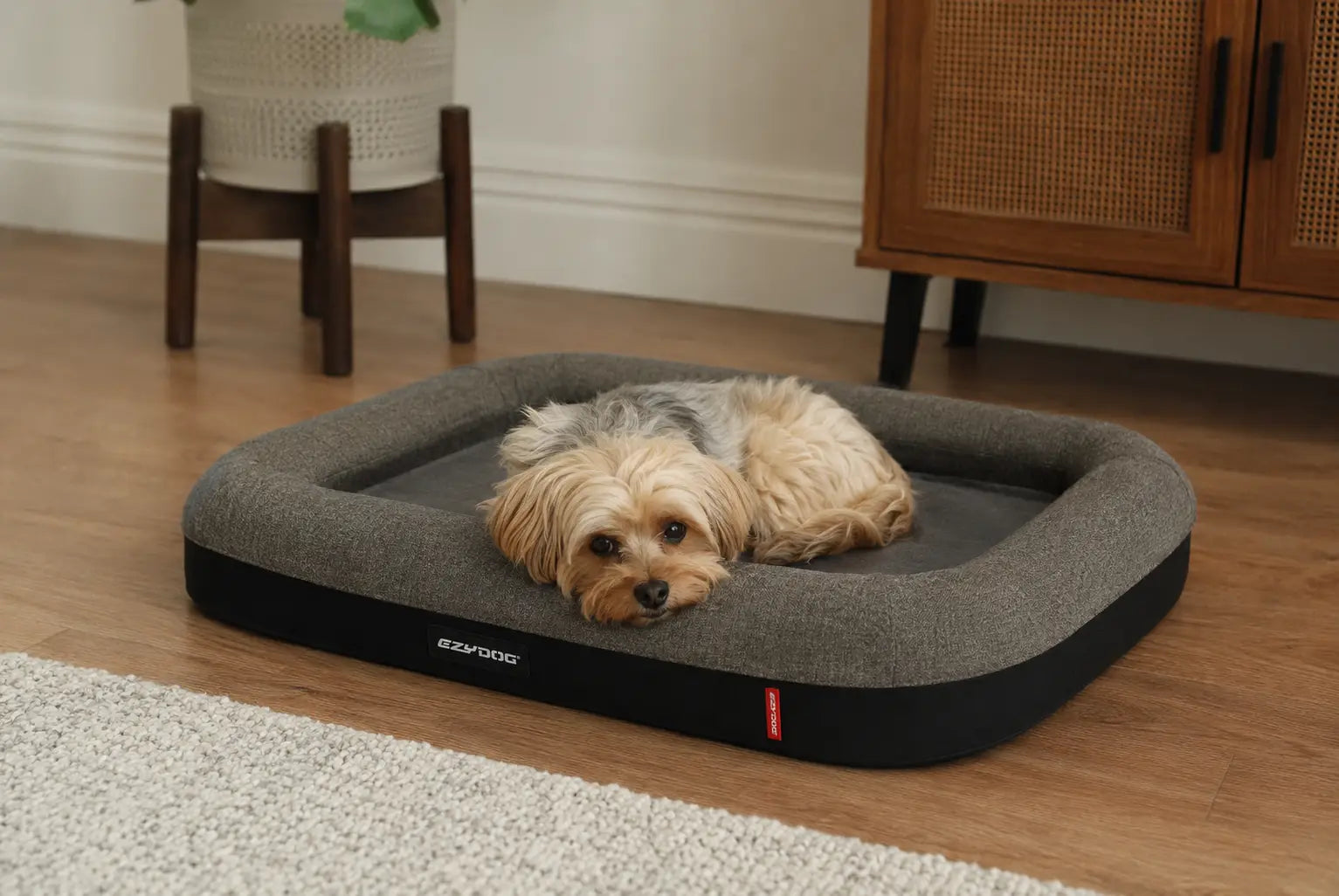
Best Small Dog Beds in Australia – Comfort for Little Breeds
Finding the right small dog bed shouldn’t feel hard—or expensive. This guide shows you exactly what to look for (size, support, washability, climate fit), folds in real dog-owner concerns, and highlights how orthopedic dog bed and everyday gear round out a comfy, safe setup for your little mate.
Why your small dog needs the perfect bed
Quality sleep fuels mood, learning, and immune health. Small breeds are energetic, but their compact frames still need great nightly support.
Joint health & support
Smaller breeds (e.g., Dachshund, Toy Poodle, Chihuahua) can be prone to back, hip, or knee issues. Beds with orthopedic or memory foam cores help distribute weight evenly and reduce pressure on joints—especially for seniors or post-activity recovery.
Tip: If your pup hesitates when jumping up in the morning or seems stiff after naps, upgrade to a supportive orthopedic core.
Security & comfort
High, soft bolsters, a slightly “den-like” feel, or hooded tops help anxious pups settle. Many small dogs prefer a snug, self-soothing rim to tuck into.
Common concern (owner insight): “My dog circles and scratches.”
This natural nesting behaviour is normal—choose durable fabrics and reinforced seams so the bed keeps its shape.
Behaviour benefits
A designated sleep spot supports routine, helps with crate or place training, and keeps your furniture fur- and scratch-free.
What to look for in a small dog bed: key features
Size & fit (small isn’t one-size-fits-all)
Measure nose-to-tail while your dog is fully stretched, then add 15–20 cm. If your dog alternates between curling and sprawling, size up to avoid “half on, half off” sleeping.
Tip: Just like with dog harness and dog collar, fit matters. The right size prevents pressure points and restlessness overnight.
Material & comfort
-
Plush comfort: Microsuede, faux-fur, or soft polyester tops suit chilly, low-body-fat breeds.
-
Orthopaedic core: Memory/high-density foam supports joints and keeps spines aligned.
-
Everyday durability: Tight weaves, double stitching, and shape-holding fills resist flattening from daily use and burrowing.
Easy cleaning (a must for small dogs that shed or bring the outdoors in)
Look for removable, machine-washable covers and, ideally, a waterproof/ water-resistant liner around the core.
Common concern (owner insight): “Plush beds trap hair.” Choose zip-off covers with simple laundering instructions and quick-dry fabrics.
Safety & stability
Non-slip bases stop the bed skating on tiles or timber. Higher bolsters act as a chin rest and add a cosy, boundary-like feel.
Types of small dog beds (and who they suit)
Bolster beds
Raised sides for leaners and curlers; great for anxious dogs that like a defined edge.
Orthopedic beds
Supportive foam for seniors, athletic little rockets, or breeds with known back/knee sensitivities.
Calming (donut/cuddler) beds
Plush rims create a soft “nest.” Ideal for pups that love to curl tight and feel hugged.
Cave/hooded beds
For burrowers that love a covered den. Warm, secure, and great for noise-sensitive pups.
Mat/crate pads
Slim, portable, and useful as toppers inside crates or for travel days. Pair with EzyDog travel safety gear for the car.
Top considerations for Australian small-dog owners
Climate suitability
-
Warm regions: Breathable tops, lighter fills, and ventilated bases help avoid overheating.
-
Cooler climates: Plush tops with insulating sides keep body heat in for longer naps.
Local availability & support
Buying from an Australian-based brand helps with faster delivery/returns and designs that actually suit local conditions.
Where to buy
Choose reputable retailers and official brand stores like EzyDig that clearly state materials, care, and size specs—and back them with support.
Tips from dog owners (and our expert verification)
-
Measure first, buy once: Most returns stem from size issues—measure your dog stretched out, then add 15–20 cm.
-
Match bed to sleep style: Sprawlers → rectangle/bolster; curlers/anxious → donut/cave; crate users → supportive pads.
-
Washability is non-negotiable: Zip-off, machine-washable covers and a liner around foam protect your investment.
-
Don’t confuse fluff with support: Plush is cosy, but it’s the core that saves joints.
Tip: If your pup digs/turns before lying down, prioritise reinforced seams and shape-retaining foam.
Caring for your small dog’s bed
-
Washing cadence: Covers every 2–3 weeks (more in shedding season). Spot clean between cycles.
-
Drying: Fully dry foam/liners before reassembly to prevent odours and mildew.
-
Rotation: If you have two beds, rotate monthly to extend lifespan and keep “favourites” fresh.
EzyDog small-dog favourites (curated picks)

EzyDog Ortho Smart Bed
Contour memory foam with cooling gel for joint support and temperature control. Removable mattress doubles as a travel or crate bed.

2-in-1 Ortho Calm Elite Dog Bed
Premium Ortho-Gel cushioning delivers weightless comfort, joint relief, and calming support.
Tip: Place the bed in a low-traffic corner away from draughts—dogs nap longer when they feel undisturbed.
Beyond the bed: everyday comfort & safety with EzyDog
-
Dog harnesses: Secure, comfortable control for daily walks—crucial for small dog neck safety versus pulling on collars.
-
Dog collars & leashes: Durable, everyday essentials that match your routine and training goals.
-
Dog travel accessories & safety gear: Seat-belt restraints and car-safe setups help beds double as calm “zones” on the road.
-
Clean-up & bedding accessories: Keep sleeping areas fresh with simple, washable add-ons.
Common concern (owner insight): “My pup won’t settle at night.”
Establish a pre-bed routine: short walk (EzyDog harness/leash), water, toilet, quiet chew, then lights low and into bed.
The EzyDog difference
-
Design for real life: Tough seams, supportive cores, and thoughtful details (liners, non-slip bases) made for daily Aussie use.
-
Australian-focused: Materials and sizing tuned for local climates and small-breed needs.
FAQs
How do I pick the right size for my small dog?
Measure your dog stretched out from nose to tail, then add 15–20 cm. If between sizes, choose the larger option—especially for pups that switch between curling and sprawling.
What’s the best bed type for anxious small dogs?
Calming beds (donut/cuddler styles) or bolster beds with supportive rims are ideal. Pair with a predictable pre-bed routine and place the bed in a quiet corner away from household traffic.
How often should I wash the bed?
Wash covers every 2–3 weeks, or more often during shedding season. Use a liner to protect the foam and ensure everything is fully dry before reassembly.
Conclusion: Invest in small comfort that makes a big difference
A great small dog bed supports joints, soothes nerves, and builds healthy sleep habits. Choose a size-right, washable, and climate-smart design—and round it out with EzyDog walk and travel gear—for a complete comfort routine your pup will love.
Soft call to action: Explore EzyDog small-friendly beds and everyday gear to create your dog’s cosiest corner at home—and a calmer experience on the go.


,%20folds%20in%20real%20dog-owner%20concerns,%20and%20hi...)
Read more

Leave a comment
This site is protected by hCaptcha and the hCaptcha Privacy Policy and Terms of Service apply.