
Dog Collar Fit Guide: How to Measure, Adjust and Choose the Right Type
A dog collar should feel secure, comfortable, and easy to wear through the day.
When the fit is wrong, small problems show up quickly. The collar may rub against the neck, twist too much, or slip off when the dog backs up. Some dogs start scratching at it. Others seem uneasy on walks even though the collar looked fine at first.
That is why fit matters just as much as the collar itself.
This guide explains how to measure your dog’s neck, check the fit, adjust it properly, and choose the right collar type for daily use.
Why collar fit matters
A dog collar does more than hold an ID tag. It stays on during walks, rest, travel, and normal day-to-day life. If it is too tight, it may leave pressure marks or cause discomfort. If it is too loose, it may move around too much or come off at the wrong time.
A good fit helps with:
- comfort through daily wear
- safer walks and outings
- secure tag placement
- better control in lighter walking situations
Most fit issues are easy to fix once you know what to check.
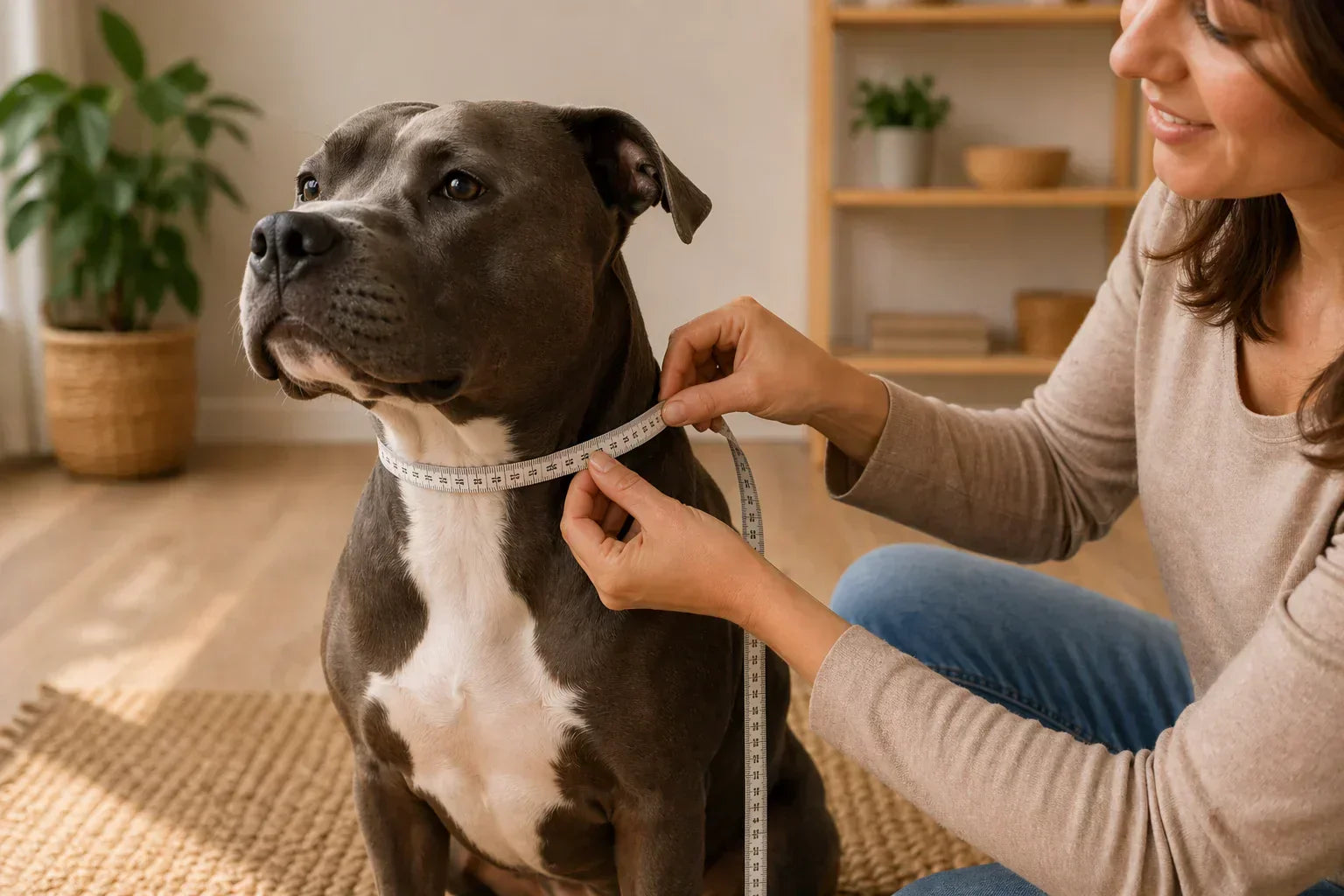
How to measure your dog’s neck
The best starting point is a fresh neck measurement.
Do not rely on breed, age, or an old collar size. Two dogs that look similar may still need different fits because of coat thickness, build, or neck shape.
A simple way to measure
- Use a soft tape measure.
- Wrap it around the base of your dog’s neck where the collar will sit.
- Keep it snug without pulling it tight.
- Write the measurement down.
- Compare it with the size guide for the collar style you are checking.
If you do not have a tape measure, use a piece of string and then lay it flat against a ruler.
This step removes guesswork and gives you a much better starting point than choosing a size by eye.
How to read a collar size guide
Many owners look for one chart that works for every collar. In practice, sizing is rarely that simple.
Different collars are built differently. Some focus mainly on neck range. Others place more weight on width, padding, or the way the collar sits on the dog. That is why the guide for the exact collar matters more than a generic size label. On EzyDog, that may mean checking the Essential Collar size guide, Double Up Collar size guide, Neo Classic Collar sizing, Checkmate Collar sizing, or Oxford Collar sizing, depending on the collar style you are checking.
When checking a size guide, look at:
- neck range
- collar width
- adjustment range
- unit of measure
- any fit notes for that collar style
The aim is not just to find a size that fastens. The aim is to find one that sits well and stays comfortable.
Use the same unit from start to finish
Some size guides use centimetres. Others use inches. What matters is consistency.
Measure the neck in one unit, then check the guide in that same unit. If needed, convert it before choosing a size. Many sizing mistakes happen when numbers are compared too quickly or read in the wrong format.
A simple, consistent check leads to a better result than rushing through the chart.
Small, medium, and large are only a starting point
Standard size labels help narrow the range, though they should never be the only thing you look at.
A small in one collar may fit differently from a small in another. Width, material, shape, and adjustment range all affect how the collar feels once it is on the dog.
That is why it helps to consider:
- your dog’s neck measurement
- coat thickness
- head shape
- growth stage
- collar width
- how much adjustment room the collar offers
A dog sitting between sizes may need extra thought, especially if the dog is still growing or has a thick coat.
How a collar should fit
A collar should sit snugly enough to stay in place, though loose enough to stay comfortable.
A useful everyday check is the two-finger rule. Two fingers should slide under the collar without force. That gives enough room for comfort without leaving the collar too loose.
A good fit usually looks like this:
- the collar stays in place during normal movement
- it does not press hard into the neck
- it does not slide over the head
- the dog moves comfortably without rubbing or coughing
This quick check is often enough to tell whether the collar needs a small adjustment.
Signs the collar is too tight
Watch for these signs:
- red marks or pressure lines
- repeated scratching at the neck
- coughing during normal wear
- fur pressed flat under the strap
- very little room under the collar
A collar that feels too tight should be loosened and checked again.
Signs the collar is too loose
Watch for these signs:
- the collar rotates too much
- the dog backs out of it
- the strap hangs away from the neck
- the collar drops lower than it should
- tags swing around too freely
A loose collar may not look like a problem indoors, though it becomes one much faster once the dog is outside.
How to adjust the collar properly
Once you have the right size, the next step is adjustment.
Place the collar at the base of the neck and fasten it. Tighten or loosen it until it feels secure, then do the two-finger check. After that, look at how the collar sits while the dog stands, walks, and turns.
A few small checks help here:
- the buckle should sit flat
- the strap should not twist
- the D-ring should stay easy to reach
- the collar should not ride too high under the jaw
Even a well-sized collar may feel wrong if the adjustment is off.
Why width matters
Length affects fit. Width affects feel.
A wider collar may feel more balanced on a stronger dog. A lighter, narrower collar often suits smaller dogs better. The right width depends on the dog’s frame, coat, and daily use.
When checking width, ask:
- does the collar look proportionate on the dog
- does it sit neatly without crowding the neck
- does it feel too bulky for daily wear
- does it match the dog’s size and movement
This part is easy to overlook, though it has a real effect on comfort.
Choosing the right collar type
Once fit is sorted, type becomes the next decision.
Flat collar
A flat collar suits many dogs for everyday wear, ID tags, and calmer walks. It is simple, easy to use, and works well for dogs that do not try to slip free.
It often suits:
- calm walkers
- dogs that do not back out of collars
- everyday home and outing use
- dogs that handle light leash pressure well
Martingale collar
A martingale collar gives extra security for dogs that tend to slip out of standard collars. It tightens in a controlled way when tension is applied, which helps reduce escape risk.
It often suits:
- dogs with narrower heads
- dogs that have slipped out of flat collars before
- handlers who want more security on walks
The right fit still matters. No collar type works well if it is adjusted poorly.
When a harness may be the better choice
A collar is not always the best walking setup for every dog.
Some dogs do better in a harness, especially if they pull hard, have throat sensitivity, or need more body support. Puppies learning leash skills may benefit from a harness too.
A dog collar usually suits:
- calm walkers
- dogs wearing tags through the day
- shorter routine outings
- dogs that do not lean heavily into the lead
A dog harness usually suits:
- dogs that pull strongly
- puppies still learning
- dogs with airway sensitivity
- flat-faced breeds
- dogs needing more body support
If your dog shows discomfort on walks, coughs often, or has a known neck or airway issue, a vet or qualified trainer should guide the setup.
Common fitting mistakes
A few mistakes come up often.
Guessing by breed
Breed offers a rough reference, not a reliable fit.
Using one chart for every collar
Sizing differs from one collar style to another.
Ignoring width
A collar may fit by length and still feel wrong because of its width.
Skipping regular checks
Dogs change over time. Weight, coat, age, and growth all affect fit.
Keeping an old fit for too long
A collar that worked months ago may need adjusting now.
Quick fit checklist
Before heading out, check these points:
- the collar sits flat
- two fingers fit underneath
- the buckle feels secure
- the D-ring is easy to reach
- the dog moves comfortably
- the collar does not twist or slide too much
This takes less than a minute and helps prevent avoidable issues.
Frequently Asked Questions
How do you measure a dog for a collar?
Measure around the base of the dog’s neck where the collar will sit. Use a soft tape measure or a piece of string and a ruler.
How tight should a dog collar be?
It should feel snug without pressing into the neck. Two fingers should slide under it comfortably.
How often should collar fit be checked?
Check it regularly, especially if the dog is still growing, has a thick coat, or has changed weight recently.
Does collar width matter?
Yes. Width affects comfort and how balanced the collar feels on the dog.
Ready to Check Collar Options?
Now that you know how to measure your dog’s neck, check fit properly, and understand which collar type may suit them best, you can look at different collar styles with more confidence. Browse EzyDog dog collars to compare fits, features, and everyday options for your dog.


Read more
Leave a comment
This site is protected by hCaptcha and the hCaptcha Privacy Policy and Terms of Service apply.