
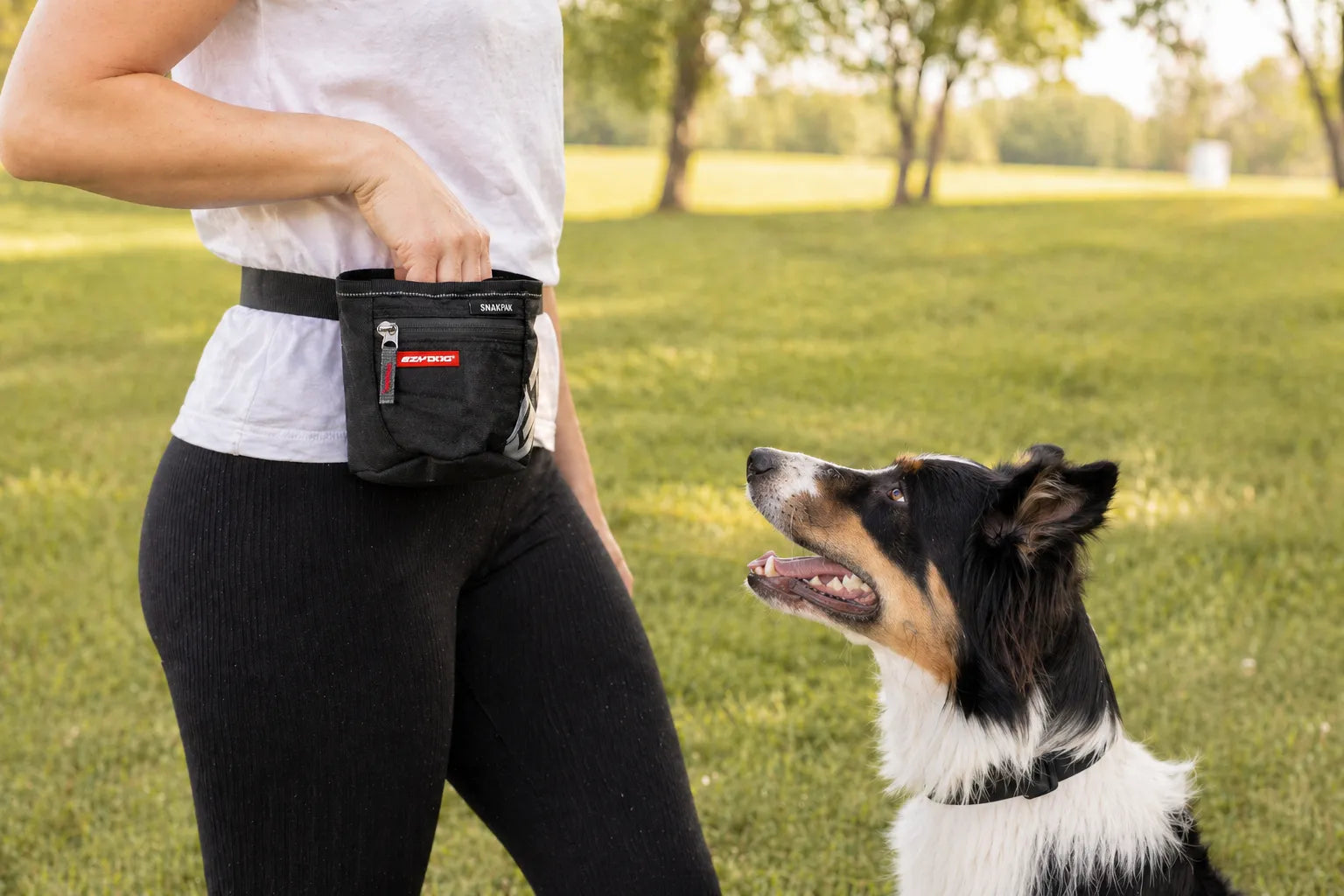
How to Use a Treat Bag for Better Dog Training and Recall
Training works best when your dog understands exactly which behaviour earned the reward.
That sounds simple, but timing often gets in the way. If the treat is buried in a pocket, sealed in a packet, or sitting on the kitchen bench, the moment has already passed by the time your dog gets it.
A treat bag helps solve that problem. It keeps rewards close, easy to reach, and separate from your keys, phone, or clothes. More importantly, it helps you reward good choices at the right time.
This guide explains how to use a dog treat bag for better reward timing, recall practice, loose lead walking, puppy training, and everyday obedience sessions.
Why reward timing matters in dog training
Dogs learn through clear patterns.
When your dog does something you like and receives a reward straight away, the lesson becomes easier to understand. If the reward arrives too late, your dog may connect it to a different behaviour.
For example, your dog comes when called, then jumps up, then gets the treat. From your dog’s point of view, the jump may have earned the reward, not the recall.
Good reward timing helps your dog understand:
-
which behaviour worked
-
when to repeat that behaviour
-
why listening to you is worth it
-
how to stay focused around distractions
A dog treat pouch for training helps because the reward is ready before you ask for the behaviour.
What a treat bag is used for
A treat bag keeps training rewards within easy reach during walks, puppy sessions, recall practice, and obedience work.
It is not just a storage pouch. Used well, it becomes part of your training routine. It helps you reward faster, keep your hands free, and avoid fumbling for food when your dog gets something right.
A treat bag is useful for:
-
recall training
-
loose lead walking
-
puppy training
-
obedience practice
-
focus work around distractions
-
rewarding calm behaviour
-
short sessions at the park
-
daily walking routines
For Australian dog owners, this matters in normal day-to-day settings like footpaths, parks, beaches, training classes, and busy suburban walking routes.
How to use a dog treat bag properly
A treat bag works best when it is set up before the session starts.
Fill it with small treats, place it where your hand can reach easily, and practise taking a treat out quickly before working with your dog. The goal is to make the reward feel smooth and automatic.
A simple setup looks like this:
-
Choose small, easy-to-eat treats.
-
Place the treat bag where your hand naturally falls.
-
Keep the opening easy to access.
-
Ask for one simple behaviour.
-
Mark the behaviour with a word like “yes” or a clicker.
-
Reward straight away.
-
Reset and repeat.
The treat bag should support the training. It should not distract your dog or turn into something they try to raid.
Keep treats small and easy to deliver
Training treats should be small enough for your dog to eat quickly.
Large treats slow the session down. Crumbly treats may make a mess. Sticky treats may be harder to handle, especially during walks or outdoor training.
Good training treats are usually:
-
small
-
soft or semi-soft
-
easy to chew
-
appealing to your dog
-
suitable for short, repeated rewards
For longer sessions, keep portions sensible. Training should not turn into overfeeding. If your dog receives many treats during practice, adjust their normal food intake where appropriate.
Use a marker before the treat
A marker tells your dog the exact moment they got it right.
This may be a word such as “yes” or a click from a clicker. The treat follows the marker. This helps your dog understand that the behaviour at that moment earned the reward.
The order matters:
-
Dog performs the behaviour.
-
You mark it.
-
You reach for the treat.
-
You reward.
Try not to reach into the treat bag before your dog responds. If your hand moves first, your dog may start watching the pouch instead of listening to the cue.
Treat bag placement matters
Where you wear the treat bag affects how smooth the reward feels.
If it sits too far behind you, you may twist or delay. If it swings around too much, it may distract you or your dog. If it is too close to your dog’s nose, they may focus on the bag rather than the task.
A good position is usually:
-
easy for your hand to reach
-
secure while walking
-
away from your dog’s direct nose line
-
comfortable enough for repeated use
During training, your dog should focus on your cue, voice, movement, and marker, not just the smell of the treats.
How to use a treat bag for recall training
Recall training depends on fast, clear rewards.
When your dog turns and comes back, reward that choice quickly. The faster the reward arrives, the easier it is for your dog to understand that returning to you was worth it.
Start in a low-distraction area before practising in harder places.
Simple recall practice
-
Start close to your dog.
-
Say their name in a happy tone.
-
Use your recall cue once.
-
Mark the moment they turn or move toward you.
-
Reward when they reach you.
-
Let them move away again, then repeat.
Recall training treats should feel worthwhile to your dog. In harder environments, such as parks or beaches, use rewards your dog truly values.
Avoid calling your dog only when the fun ends. Mix in recalls where your dog comes back, gets rewarded, and then gets released to play again. That helps the cue stay positive.
Using treats for loose lead walking
Loose lead walking takes practice because dogs naturally move faster than people.
A treat bag helps because rewards stay ready while your dog is walking beside you. You can reward the moment the lead softens, your dog checks in, or they choose to walk near your leg.
What to reward
Reward your dog when they:
-
walk with a loose lead
-
look back at you
-
slow down without pulling
-
return to your side after moving ahead
-
pass a distraction calmly
Keep the treat delivery close to where you want your dog to walk. If you reward too far forward, your dog may learn to surge ahead. If you reward beside your leg, that position becomes more valuable.
Puppy training with a treat pouch
Puppies learn in short bursts.
A puppy training treat pouch makes it easier to reward often without stopping the session. This helps with early skills like name response, sit, touch, recall, crate practice, and calm handling.
Keep puppy sessions short. One to three minutes may be enough at first. End before the puppy loses focus.
Useful puppy rewards include:
-
tiny soft treats
-
pieces of normal food
-
calm praise
-
short play
-
release to explore
Food rewards help build the habit, but the aim is not to carry food forever. The aim is to teach clear behaviours first, then reward in different ways over time.
Treat access during obedience sessions
Obedience training needs rhythm.
Ask, mark, reward, reset. That rhythm breaks when you have to search through pockets or open a packet each time.
A treat bag helps keep sessions smooth for skills such as:
-
sit
-
drop
-
stay
-
leave it
-
touch
-
place
-
heel position
-
name response
The easier the reward is to access, the easier it is to keep your dog engaged.
Still, rewards should not come out randomly. Wait for the behaviour, mark it, then deliver the treat.
Training around distractions
Australian parks, footpaths, beaches, and shared walking tracks come with distractions.
Other dogs, cyclists, birds, kids, food smells, and water can all pull your dog’s focus away. A treat bag helps you stay ready when your dog chooses to check in, move away from a distraction, or respond to a cue.
Reward small wins at first.
For example:
-
your dog sees another dog and looks back at you
-
your dog hears a skateboard and stays calm
-
your dog walks past a bird without lunging
-
your dog turns away from a food wrapper
-
your dog comes back after sniffing
These moments are easy to miss if rewards are not ready.
Do not let the treat bag become the cue
One common mistake is letting the treat bag signal training time.
If your dog only listens when the pouch is visible, the bag has become part of the cue. To avoid this, practise sometimes with the bag visible, sometimes hidden, and sometimes with rewards placed nearby.
You can also reward with:
-
praise
-
a dog toy
-
permission to sniff
-
a short game
-
release to play
-
access to something your dog wants
The treat bag helps during learning, but your dog should still respond to your voice and cues.
How to fade treats over time
Treats are useful, but they should not remain the only reward forever.
Once your dog understands a behaviour, start rewarding some repetitions with food and others with praise, play, or real-life rewards. Keep food rewards for harder moments, new places, or stronger distractions.
A simple way to progress:
-
Reward every correct response when teaching.
-
Reward often once the dog understands.
-
Mix food with praise and life rewards.
-
Save higher-value treats for harder environments.
-
Keep surprise rewards for excellent choices.
This keeps training strong without making every cue depend on visible food.
Common treat bag mistakes
A treat bag helps most when it is used with clear handling.
Reaching too early
If your hand goes into the bag before your dog responds, the pouch may become the signal. Mark first, then reach.
Using treats that are too large
Big treats slow the session down and may lead to overfeeding.
Holding the bag too close to the dog
If the bag sits right near your dog’s nose, it may become a distraction.
Rewarding the wrong moment
Timing matters. Reward the behaviour you want, not the jump, bark, or pull that happens after it.
Practising too long
Short, focused sessions usually work better than long, messy ones.
Cleaning and treat hygiene
Treat bags need regular cleaning, especially in warm Australian weather.
Food crumbs, oils, and moisture can build up quickly. Empty the pouch after training, shake out crumbs, and wipe or clean it based on the care instructions for that bag.
Good habits include:
-
remove old treats after each session
-
avoid leaving soft food inside overnight
-
keep the pouch dry between uses
-
wash hands after handling treats
-
clean the bag often if using moist rewards
Clean gear makes training more pleasant and helps keep treats fresher.
When a treat bag helps most
A treat bag is most useful when timing matters.
That includes early learning, recall practice, loose lead walking, puppy sessions, and training around distractions. It helps you reward quickly without breaking the flow of the session.
It may not be needed for every moment at home. But for outdoor training, group classes, or focused walking practice, it keeps rewards ready when your dog makes the right choice.
FAQs
How do you use a dog treat bag for training?
Fill it with small treats, place it where your hand can reach easily, mark the correct behaviour, then reward straight away. Keep your hand out of the bag until after your dog responds.
Where should I wear a dog treat pouch?
Wear it where you can reach it quickly without twisting or bending. It should stay secure and should not sit directly in front of your dog’s nose.
What treats should I use for recall training?
Use small, high-value treats your dog really likes. Recall needs to feel rewarding, especially around distractions such as parks, beaches, or other dogs.
Can a treat bag help with loose lead walking?
Yes. It helps you reward quickly when the lead softens, your dog checks in, or they walk near your side without pulling.
Should I use treats forever?
No. Treats are useful during learning and in distracting places, but over time you can mix in praise, play, sniffing, and other rewards.
Ready to Make Training Rewards Easier?
Explore EzyDog treat bags to compare practical options made for quick access during walks and training sessions.


Read more

Leave a comment
This site is protected by hCaptcha and the hCaptcha Privacy Policy and Terms of Service apply.