
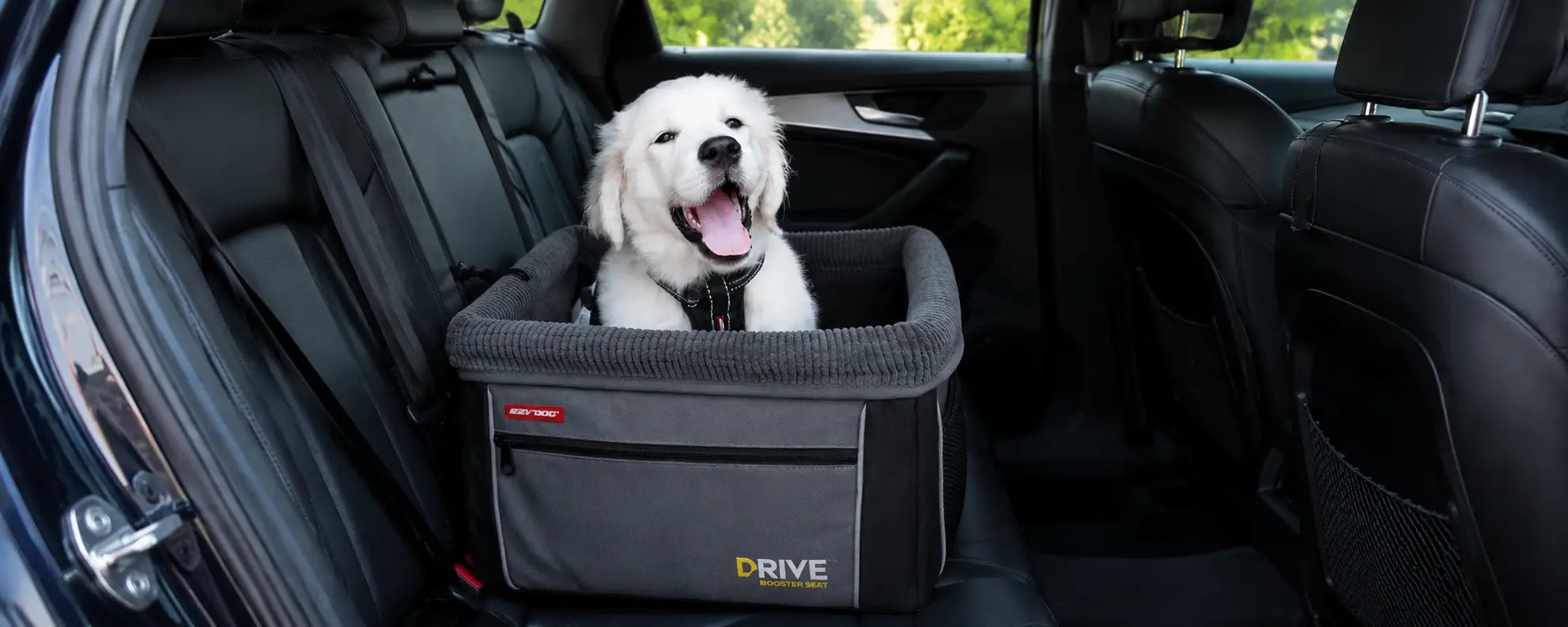
Puppy Car Travel: How to Keep Your Puppy Safe in the Car
From the drive home on day one to those early trips to the vet, your puppy will spend time in the car well before their first walk in the park. Getting car travel right from the start keeps your puppy safe and helps them grow into a confident passenger. Here is how to restrain your puppy properly, help them settle, and keep those first trips calm.
The Short Answer
A puppy should always be restrained in the car, never loose and never on your lap. An unrestrained puppy can be hurt if you stop suddenly, and can distract you while you drive. Keep early trips short and positive too, so your puppy learns the car is nothing to worry about.
Why Restraint Matters
A puppy moving freely around the car can be injured if you brake hard, and becomes a hazard to everyone on board. A puppy climbing into your lap or across the seats is also a serious distraction. Securing them in one spot solves both.
There is a legal side as well. Rules on transporting dogs vary across Australian states and territories, and an unrestrained dog can create issues under road and animal welfare laws, particularly if it affects your control of the vehicle. Because the specifics differ by location, it is worth checking the current rules where you live. You can read a state-by-state overview on our dog travel laws in Australia page.
How to Restrain a Puppy Safely
There are a few ways to secure a puppy in the car, and it helps to know the difference.
A seatbelt restraint attachment. This clips your puppy's harness to the car's seatbelt so they can sit or lie down without roaming. It keeps them in place and cuts driver distraction. Worth knowing: a simple restraint attachment is designed to position your dog, not to protect them in a crash, so treat it as part of travelling sensibly rather than a safety guarantee. The standard attachment is also not designed for Volvo vehicles, so check the product details if that applies to you.
A crash-tested car harness. If you want a harness built and tested for vehicle safety, the Drive Car Harness is crash tested and works as both a car harness and a walking harness.
A booster seat. The Drive Booster Seat raises small dogs and puppies up to 15kg for a clear view of the road, which can help ease motion sickness. It clips in like the standard attachment, fits most car seats, and has a washable liner and padded edges. It is designed for use in the rear seat.
Whichever you choose, the harness should fit well, and you should check the fit as your puppy grows. You can see the options in the car restraints range.
Getting your Puppy used to the car
Some puppies take to the car happily, others find it strange at first. Start with the engine off: let your puppy sit in the parked car with you and a treat, so they link it with good things. Once they are relaxed, try a short trip around the block and build up from there. Ending trips somewhere nice, rather than only at the vet, helps them see the car as a good thing.
Easing Car Sickness
Car sickness is common in young puppies, and many grow out of it. If your puppy drools, whines, or seems unsettled, let some fresh air into the car and travel when their stomach is not too full. If it continues or seems severe, have a chat with your vet, who can suggest options suited to your puppy.
A Quick pre-trip Checklist
A few seconds of preparation makes every trip safer:
-
Restraint fitted and secure, with the harness checked for fit.
-
A dog collar with an ID tag on your puppy.
-
Water on hand for longer trips.
-
A short, simple route while your puppy is still getting used to travel.
-
Never leave your puppy alone in the car. It heats up fast, and a hot car is dangerous even on a mild day.
Frequently Asked Questions
Is it illegal to drive with an unrestrained dog in Australia?
Rules vary by state, and unrestrained dogs can face penalties, especially if the dog affects your control of the vehicle. Check the current rules for your state before you travel.
How do I stop my puppy getting car sick?
Keep early trips short, let in some fresh air, and travel when their stomach is not too full. Most puppies improve with time. If it continues, speak with your vet.
Can a puppy travel in the front seat?
This varies by state, and even where it is allowed, the back seat is generally safer for a dog. Never let your puppy sit on your lap while driving.
What is the safest way for a puppy to travel in a car?
A well-fitted harness clipped to a restraint, or a crash-tested car harness, keeps your puppy in one place and free from distraction. For small puppies, a booster seat does the same while giving them a view out.
Putting It All Together
Restrain your puppy properly every time, introduce the car gently, and never leave them alone in a warm vehicle. Do that, and your puppy will grow into a calm, confident passenger.


Read more
Leave a comment
This site is protected by hCaptcha and the hCaptcha Privacy Policy and Terms of Service apply.