
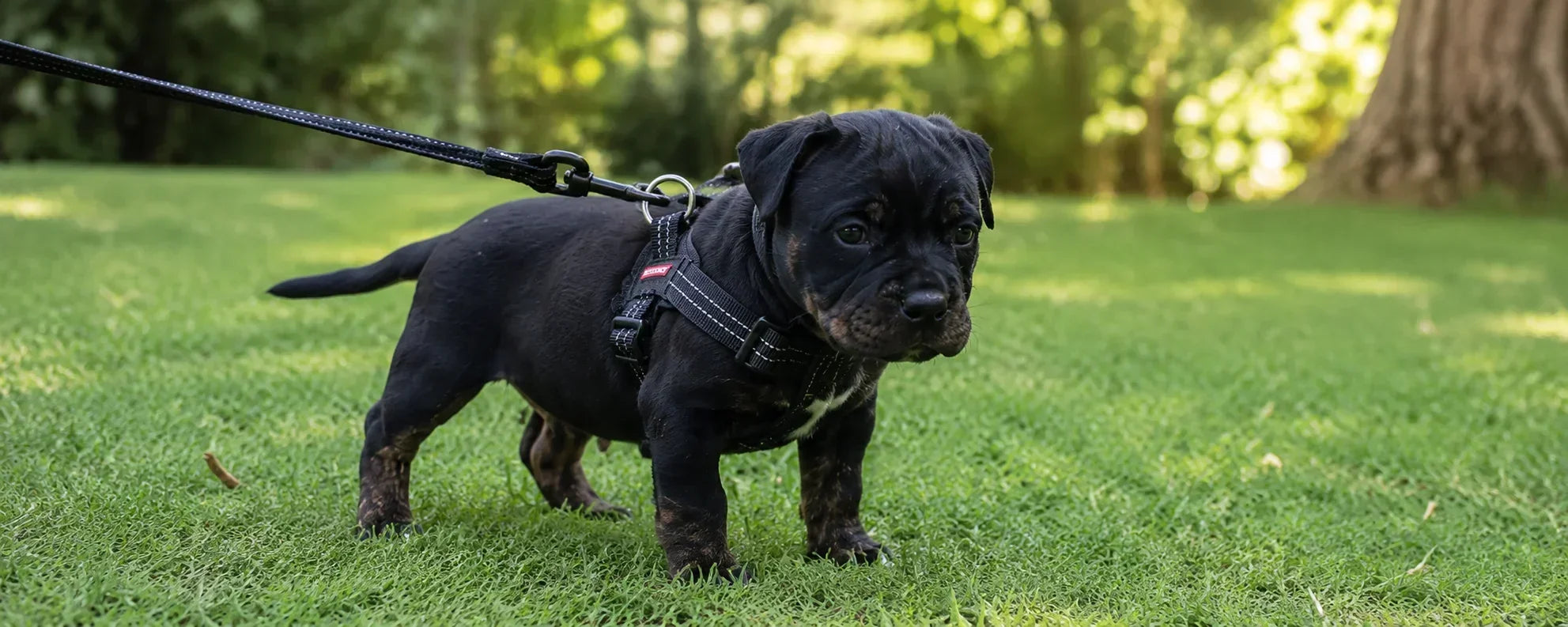
How to Choose the Right Gear for Your Puppy
Bringing home a new puppy is exciting, but the shopping list can feel endless. Harness, collar, lead, and plenty of conflicting advice on what you actually need. If you are wondering where to start, this guide breaks down what genuinely matters in those first months, so you can make a confident choice.
The Most Important Thing to Get Right
With a puppy, fit matters more than anything else. Puppies grow quickly, and gear that fits perfectly today can be too snug in a few weeks. So the goal is simple: choose gear in the correct size now, and make sure it can adjust as your puppy grows.
The second thing to understand is the difference between a harness and a collar for a young puppy. For walks and early lead training, a harness is usually the better choice. It spreads pressure across the chest rather than the neck, which is gentler on a puppy who is still learning not to pull. A collar still has an important job, mostly as somewhere to attach an ID tag, but it is not the ideal tool for controlling a wriggly, excitable pup on their first walks.
Get those two things right, correct fit and a harness for walking, and you have covered the decisions that matter most.
What a Puppy Actually Needs
You do not need to buy everything at once. Three items cover the essentials for getting out safely:
-
A harness for walks and early lead training
-
A collar to hold their ID tag
-
A lightweight lead that is easy to handle
Most puppies can start wearing a harness from around eight weeks old, as long as it is sized correctly and comfortable. Everything else can wait or be added over time. Starting with these three keeps things simple and gets you out the door.
Choosing a Harness
A good puppy harness does one thing above all: it fits well now and keeps fitting as your puppy grows. When you are comparing options, look for a few things.
-
Adjustability. Straps that adjust in more than one place give you room to size up as your puppy grows, which saves buying a new harness every month.
-
An easy fit. Puppies rarely stand still. A harness that steps on or fastens with a side buckle is far easier to manage than one that has to go over the head, which many pups dislike.
-
Comfort against the body. Look for padding or a shaped chest panel and smooth edges, so nothing digs in or rubs during a walk.
-
Visibility. Reflective trim or stitching is a small feature that matters on early-morning or evening walks.
As an example of a design that ticks these boxes, the Essential Chest Plate Harness has adjustable straps and a moulded chest plate that shapes to your dog over time, and it steps on rather than going over the head. But the features above are what to look for in any harness, whichever brand you choose. You can compare styles in the dog harnesses range.
Choosing a Collar
At this age, a dog collar is mainly for identification. It is where your puppy's ID tag sits, and keeping your details on your dog is simply good practice in Australia.
Fit is the thing to watch. A puppy's neck grows quickly, so pick an adjustable collar and check it often. A good rule is to slide two fingers comfortably between the collar and your puppy's neck. If you cannot, it needs loosening.
Many owners walk their puppy on a harness for control and keep a lightweight collar on for the tag. That way each item does the job it is best suited to. The Essential Adjustable Collar is one example that fits the bill, a simple, adjustable everyday collar that is easy to resize as your puppy grows. You can see the sizes and styles available in the dog collars collection.
Choosing a Lead
A puppy lead should be light and comfortable to hold. A thick, heavy lead made for a large adult dog is more than a small pup needs and can feel clumsy for you.
Aim for something lightweight with a secure clip and a comfortable handle. Length is a matter of preference, though a standard lead gives you enough control for early walks without being unwieldy. The Essential Adjustable Leash is one example, a lightweight everyday lead with an adjustable length, so it stays useful as your puppy grows. Browse the dog leads range to find one that suits your puppy's size.
How to Measure and Fit Gear on a Growing Puppy
Getting the fit right is worth a few extra minutes.
Measuring for a harness. Use a soft tape measure to find your puppy's girth, the widest part of the chest just behind the front legs. Match that measurement to the size guide on the product page rather than guessing by breed, since puppies of the same breed can vary a lot.
Checking the fit. A harness should sit snugly without digging in. You should be able to slip two fingers under any strap. If it leaves marks or your puppy seems restricted, loosen it. If it slides around or your puppy can back out of it, tighten it.
Recheck often. This is the big one with puppies. A fit that was perfect last month may be too tight now, so check every couple of weeks and adjust as they grow. Our guide on how to measure your dog for a harness walks through it step by step.
Don't forget the collar and lead while you're at it. Use the same two-finger rule to check the collar isn't too tight, and make sure the lead's clip and handle are still comfortable for your hand as your puppy grows.
Common Mistakes to Avoid
A few simple slip-ups catch out plenty of new owners:
-
Buying for today's size only. Puppies grow fast, so adjustable gear will serve you far longer than something that fits for a fortnight.
-
Relying on a collar alone for a puller. A puppy still learning lead manners is usually easier to guide on a harness.
-
Choosing a lead built for a big adult dog. A lighter lead is easier for a small puppy and more comfortable in your hand.
Frequently Asked Questions
What age can a puppy wear a harness?
Most puppies can wear a lightweight, well-fitted harness from around eight weeks, as long as it is sized correctly and comfortable. Check the fit regularly as they grow.
Is a harness or collar better for a puppy?
A harness, generally, since it is gentler on a growing puppy's neck and gives better control on walks. Keep the collar on for the ID tag; many owners use both together.
How often should I resize my puppy's gear?
Roughly every couple of weeks while they are growing fastest. Use the two-finger rule each time to check nothing has become too tight.
What size harness does my puppy need?
It depends on chest girth, not breed or age. Measure the widest part of the chest just behind the front legs and match it to the size guide on the product page.
Putting it all together
Choosing your puppy's first gear does not need to be complicated. Start with a well-fitted, adjustable harness, add a lightweight collar for their ID tag, and pair it with a lead that is easy to handle. Check the fit regularly as they grow, and you are ready for those first walks together.


Read more

Leave a comment
This site is protected by hCaptcha and the hCaptcha Privacy Policy and Terms of Service apply.